
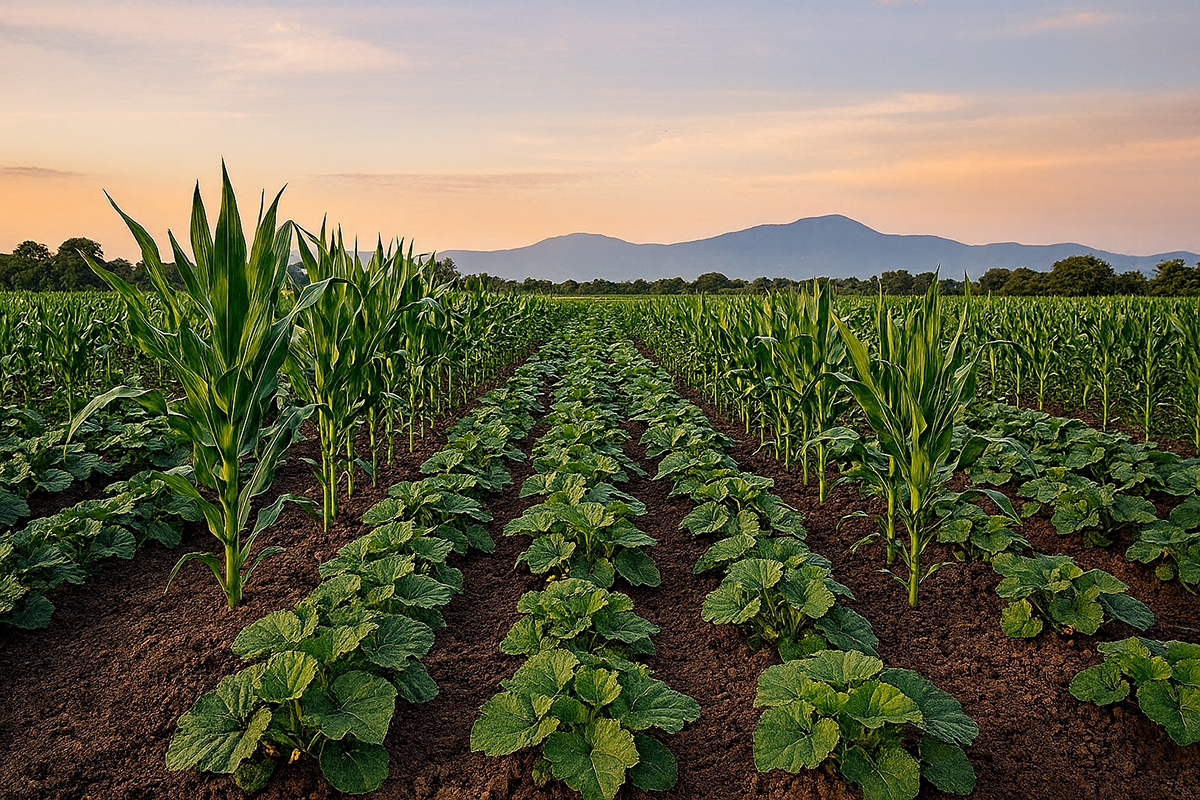
The term “Milpa” refers to a traditional Mesoamerican agricultural system, often translated as “cultivated field” or “cornfield” in Nahuatl. It’s a sustainable farming practice, particularly known for the “Three Sisters” planting method, which combines corn, beans, and squash. Beyond its agricultural significance, the milpa holds deep cultural importance, representing the connection between humans, nature, and spirituality.
Agricultural System:
The milpa is a dynamic, cyclical system where crops are rotated within a plot of land that has been cleared from the forest, often by controlled burning.
Three Sisters:
The milpa is famous for the “Three Sisters” planting method, where corn provides a stalk for beans to climb, beans add nitrogen to the soil, and squash provides ground cover, suppressing weeds and retaining moisture.
Sustainability:
The milpa system emphasizes sustainability through crop rotation, allowing the land to regenerate and maintain fertility over time.
Cultural Significance:
The milpa is not just a farming technique; it’s a cultural practice deeply embedded in Mesoamerican traditions, with rituals and beliefs associated with planting and harvesting.
Food Security:
The milpa provides a variety of essential foods, contributing to the food security of indigenous communities.
Biodiversity:
The milpa system promotes biodiversity by creating a mosaic of habitats that support various plant and animal species.
Connection to the Past:
The milpa is seen as a way to connect with ancestral traditions and maintain cultural heritage